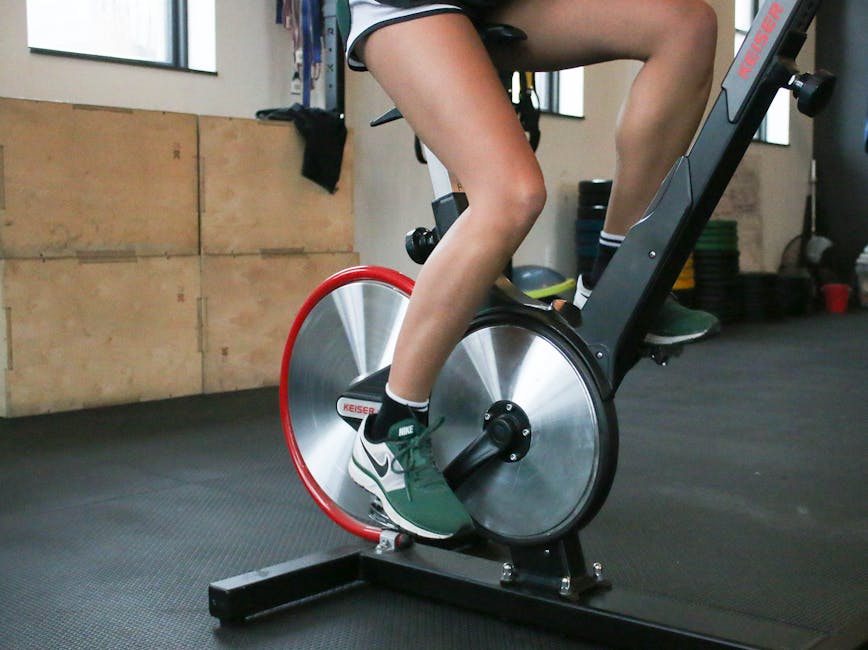
Why “Trends In Healthcare Data Breach Statistics” Matters to Fitness Equipment Brands
The headline “Trends In Healthcare Data Breach Statistics” from The HIPAA Journal looks, at first glance, like a story for hospitals, insurers, and health apps. Many fitness equipment brands will read it and assume it has little to do with treadmills, connected bikes, smart strength systems, or recovery devices. That assumption is wrong. In the United States in 2026, the compliance risk around Fitness Equipment is no longer confined to product safety, electrical testing, or basic label requirements. If your product collects user metrics, syncs to an app, stores account data, or integrates with wellness ecosystems, the market is treating your device as part of a broader health-data environment.
The conventional wisdom says the big challenge for fitness equipment brands entering the United States is hardware compliance: certify the product, draft the label, clear customs, and launch. The contrarian view is this: that is no longer the hardest part of US market entry. The greater strategic risk in 2026 is the collision of product compliance, trade disruption, data governance, and channel scrutiny. Brands that still approach US expansion as a packaging-and-testing exercise are exposing themselves to slower retail approvals, more Amazon listing risk, and higher post-launch liability. The breach-statistics story matters because it shows how aggressively US institutions now react to data vulnerability. That reaction is spilling over into connected consumer hardware, including fitness equipment.
The Myth: US Compliance for Fitness Equipment Is Mostly About Safety Labels
Ask many non-US founders what matters most for US launch, and the answer is predictable: warnings, instruction manuals, voltage, materials, and import paperwork. All of those matter. But they are the minimum threshold, not the decisive advantage. Retail buyers, marketplaces, insurers, and enterprise wellness customers are increasingly asking harder questions: What user data does the equipment collect? Where is it stored? How is firmware updated? Who is the importer of record? Which state-specific warning or environmental disclosure applies? How resilient is the supply chain if tariffs shift in a quarter?
This is where the old model breaks. A connected rower with biometric tracking may not be regulated the same way as a medical device, but that does not shield the brand from scrutiny. If the product captures heart rate trends, body metrics, performance logs, geolocation, account credentials, or payment data, the reputational fallout from a breach can exceed the damage from a missing label line. The HIPAA Journal story is a reminder that the US market is conditioned to take health-adjacent data exposure seriously. Consumer trust, corporate wellness procurement, and partner due diligence now reflect that reality.
For founders planning global expansion, this means regulatory compliance in the US should be mapped across four layers, not one:
- Product compliance: safety, materials, electrical, and performance-related requirements.
- Label requirements: warnings, importer/manufacturer identification, claims discipline, and instructions.
- Commercial compliance: customs classification, tariffs, marketplace rules, and documentation.
- Data and systems compliance: privacy notices, cybersecurity controls, app architecture, and vendor oversight.
Brands that separate these categories too rigidly usually find the US market recombines them. One weak point becomes a launch problem everywhere else.
The Real 2026 Regulatory Update: Trade and Enforcement Now Shape Compliance
A second bad assumption is that compliance rules change slowly. In the US, the formal regulations may move gradually, but the commercial environment can change overnight. The 2026 tariff picture is a clear example. Wiley Rein reported on new 50% tariffs on certain Canadian imports, while ArentFox Schiff highlighted broader customs and trade developments in its June 2026 update. For fitness equipment brands, that is not background noise. It changes landed cost, sourcing decisions, valuation of inventory, and even the viability of specific SKUs.
Why does that belong in a compliance article? Because in practice, customs exposure has become part of launch readiness. Misclassification, incomplete documentation, and weak origin substantiation are no longer just trade mistakes; they can block market entry, distort pricing, and trigger retailer concerns about continuity of supply. A US buyer does not care whether your margin problem came from a tariff surprise or a failed factory transition. They care whether you can deliver product consistently and lawfully.
For brands selling larger cardio machines, cable systems, or electronically connected equipment, even small duty changes can materially affect the business model. If your launch budget assumed one sourcing route and your actual import costs rise sharply, your label redesign, distribution strategy, and channel positioning may all need revision. That is why a modern regulatory update for fitness equipment must include trade intelligence, not just product standards.
This is also where founders often underinvest. They spend heavily on packaging and agency creative, then enter the US without a disciplined import-risk analysis. A stronger approach is to pressure-test all three before launch: customs classification, country-of-origin exposure, and substitute sourcing paths. That is exactly the kind of issue a US Market Snapshot ($349) or a deeper full US Launch Report ($599) should clarify before inventory is booked.
Connected Fitness Is Quietly Becoming a Data-Trust Category
The breach-statistics headline matters because US consumers, employers, and institutions no longer separate “fitness data” from “health data” as neatly as lawyers might. If a connected bike app tracks resting heart rate, sleep-linked recovery metrics, weight trends, or adherence patterns, many users view that as sensitive information, whether or not a specific law classifies it the same way as hospital records. Once expectation shifts, commercial pressure follows.
This is particularly relevant for brands pursuing gyms, multifamily housing, hotels, rehabilitation-adjacent settings, and employer wellness channels. Enterprise buyers increasingly conduct security diligence even when the product is not an FDA-regulated medical device. They want to know whether the device pushes updates securely, whether admin access is role-based, whether third-party analytics tools are embedded, and whether user accounts can be deleted on request. Those questions are now part of selling premium connected fitness in the United States.
The contrarian point is simple: for many fitness equipment brands in 2026, cybersecurity and privacy hygiene are more important to commercial success than one more performance claim on the box. You may still need robust claims substantiation, but “we collect less data, store it more carefully, and explain it clearly” is becoming a stronger market proposition than brands realize.
That has direct implications for label requirements and product-page compliance. If packaging, inserts, or Amazon listings overpromise “health insights,” “recovery diagnostics,” or “clinical-grade tracking,” they can create a mismatch between consumer expectation and actual governance practices. A disciplined Amazon Listing Audit can catch these overstatements before they become a trust problem, chargeback issue, or legal headache. Brands that treat listing copy as separate from compliance are missing how US enforcement and customer scrutiny actually work.
FDA Is Not the Whole Story for Fitness Equipment in the United States
You asked for the US market regulated by FDA, and that framing matters most when fitness-adjacent products creep toward medical or therapeutic claims. Most core fitness equipment is not reviewed like a drug or a high-risk device. But that does not mean FDA is irrelevant. The agency’s presence matters whenever a brand starts implying diagnosis, treatment, rehabilitation outcomes, injury prevention claims without support, or clinical performance language that edges out of general wellness and into regulated territory.
The practical mistake brands make is assuming “not a medical device” means “low regulatory risk.” In reality, the US market layers multiple oversight points around a product: federal safety expectations, customs rules, state-level requirements, marketplace documentation standards, consumer-protection law, and claims scrutiny. The FDA angle becomes one piece of a larger compliance picture, especially for recovery platforms, vibration systems, red-light adjacent devices, posture trainers, or equipment marketed for pain relief and rehabilitation.
Supportive federal guidance from agencies outside FDA also shows how operational discipline is judged in the US. The CDC’s vaccine storage and handling guidance, while unrelated to gym equipment itself, is a useful benchmark for how US authorities think about documented procedures, temperature control, staff training, traceability, and incident response. In other words, the American regulatory mindset values not just the existence of a rule, but evidence that a company can execute the rule consistently. Fitness equipment brands entering the US should borrow that mindset: written SOPs, clear escalation paths, and documented verification matter.
This is where an AI Label Compliance Analysis ($599) is more than a formatting check. A strong review should examine whether your labels, inserts, and digital product claims accidentally escalate the regulatory profile of the product. One phrase like “treats chronic back pain” or “medical-grade monitoring” can trigger a very different conversation than “supports training recovery” or “tracks workout performance.” In 2026, wording is not cosmetic. It is market access strategy.
State-Level Signals Show a Harder Operating Environment, Not a Softer One
Some executives still think federal compliance is the only game that matters. But state-level actions tell a different story. Pennsylvania’s announcement of $10 million in funding for nonprofits to combat hate crimes and New York’s announcement of $100 million in law enforcement technology and equipment investment are not fitness-equipment policies. They are, however, useful market signals. States are spending on security, enforcement capacity, and technology infrastructure. That broader posture tends to support stricter procurement expectations, stronger institutional diligence, and less tolerance for vague vendor controls.
Why should a fitness brand care? Because the US is not one homogeneous compliance environment. States shape how products are sold into schools, municipal facilities, housing projects, wellness programs, hospitality groups, and nonprofit organizations. They influence contract language, insurance expectations, warning practices, privacy disclosures, and accessibility standards. A connected strength machine sold DTC nationwide may face one risk profile; the same machine sold into universities or public-sector wellness initiatives may face another entirely.
The contrarian lesson is that state signals often predict commercial friction before formal category-specific rules appear. If security and procurement controls are tightening across public institutions, brands should expect more scrutiny around vendor data practices, installation protocols, and service records. If trade uncertainty is rising, they should expect more questions on sourcing resilience. If consumer-protection actions are broadening, they should expect more discipline around comparative claims and before-and-after promises.
Too many brands wait for a category-specific crackdown before taking action. The better move is to read the surrounding enforcement climate. In the US, adjacent signals often tell you where buyer expectations are moving next.
What Brands Should Do Differently for US Market Entry in 2026
If the old playbook said “pass baseline compliance and start selling,” the 2026 playbook says “build a launch system.” That means founders and marketing directors need to stop treating compliance as a final gate and start using it as a commercial design function. The brands that win in the United States are increasingly the ones that can prove operational maturity, not just product desirability.
Here is the practical shift we recommend for fitness equipment brands pursuing the US market:
- Audit the product as both hardware and data infrastructure. Map every data point collected by the equipment and its app. Identify what is stored, transmitted, shared, and retained. If that map does not exist, your privacy posture is weaker than you think.
- Review all claims against the product’s true regulatory position. Strip out language that implies medical outcomes unless you have the evidence and regulatory basis to support it. Align website copy, packaging, inserts, and retailer content.
- Pressure-test tariffs and customs scenarios before launch. Build pricing models that account for changing duty exposure and alternate sourcing. A product that is compliant but unprofitable after import shocks is not launch-ready.
- Localize label requirements for the United States, not just “English-language export.” Include the correct identity, warnings, instructions, and any state-relevant notices where applicable. Generic global packaging often misses details that matter in US channels.
- Prepare channel-specific documentation. Amazon, specialty retail, distributors, and enterprise buyers ask for different evidence sets. One universal PDF rarely solves all of them.
- Create an incident-response plan before the first shipment lands. That includes product issues, firmware vulnerabilities, marketplace takedowns, and consumer complaints. Speed of response is now part of brand credibility.
For founders who want a faster path, the right sequence is straightforward: start with a US Market Snapshot to identify the immediate barriers, move to a full US Launch Report if the brand is serious about scale, and use BrandVault or Industry Intel to keep tracking trade, compliance, and competitive shifts after launch. The brands that treat intelligence as an ongoing operating input tend to make fewer expensive corrections later.
The biggest misconception in this category is that compliance slows growth. In the US fitness equipment market, poor compliance slows growth; smart compliance improves launch speed, buyer confidence, and channel stability. The breach-statistics news hook makes that clear in a roundabout way. When the market becomes more sensitive to data mishandling, every connected product category inherits more scrutiny. Fitness equipment is no exception.
The brands that will outperform in 2026 are not the ones asking, “What is the minimum we need to enter?” They are the ones asking, “What proof does the US market now expect before it trusts us?” That is the better question for global expansion, and it leads to better decisions on claims, sourcing, labels, software, and go-to-market design.
If you are planning a US launch for fitness equipment, get a personalized US Launch Intelligence Report or start with a free Brand Readiness Score to identify the compliance, trade, and channel risks most likely to affect your entry strategy.