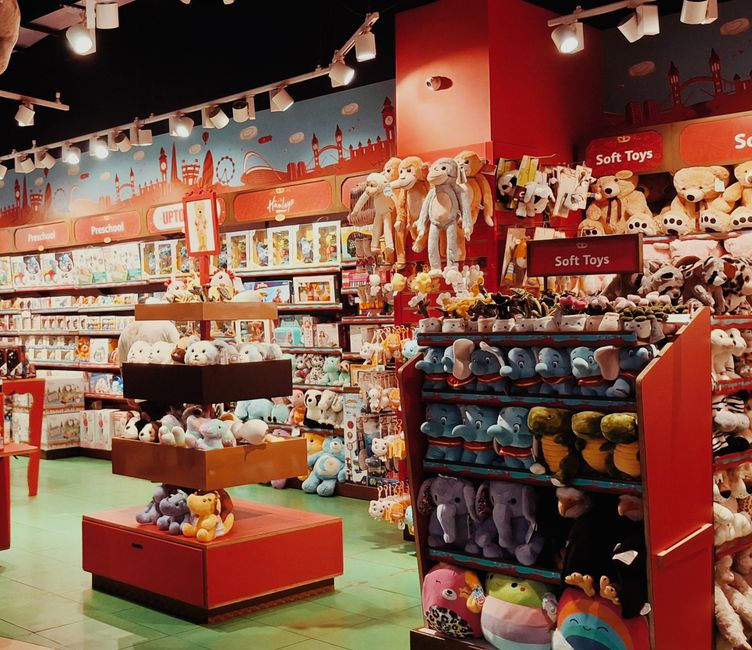
What does the US Toys & Games market opportunity look like in 2026?
For founders planning global expansion, the first question is simple: is the United States worth the effort? In Toys & Games, the answer is yes—but only if you understand where demand is growing and how retail channels are changing. The US remains the world’s largest consumer market for toys, family games, collectibles, educational play, and licensed products. Industry estimates in 2026 place the broader US toys and games market size in the tens of billions of dollars annually, with steady single-digit CAGR depending on segment. Traditional toy categories such as action figures, dolls, vehicles, arts and crafts, and infant/preschool remain significant, but some of the strongest growth is coming from collectibles, STEM/educational products, kidult purchases, board games, and social play formats.
That matters because retail buyers are not buying “toys” in the abstract. They are buying into specific demand narratives: lower-screen-time play, learning-based products, nostalgic IP, value-price gifting, and products that perform well both on shelf and online. In the US, a toy line with a clear age-grade, strong packaging story, and retail-ready compliance profile has a much stronger chance of opening doors than a broad product catalog without positioning. If you are entering the market from Europe, Asia, Latin America, or Australia, your success depends less on whether the category is large and more on whether your product fits a retailer’s assortment logic.
The strongest market opportunity is often not “every retailer in America,” but the right subset of them. Mass retail offers scale, but specialty toy chains, museum stores, education channels, regional gift retailers, and digitally native marketplaces can be faster for market entry. A premium wooden educational toy may be too niche for a first Walmart conversation but highly relevant to specialty chains or curated e-commerce players. A value-priced impulse collectible might resonate with mass, grocery, drug, and checkout-focused channels. Buyer targeting starts with category alignment.
This is where a data-led market map matters. US Brand Launch’s US Market Snapshot ($349) is useful for founders who need a fast read on the category, while the full US Launch Report ($599) is better when you need retailer fit, pricing benchmarks, competitive set analysis, and launch priorities. Before outreach begins, you should know your ideal US price point, likely retail channel, and whether your packaging, claims, and compliance standards support serious buyer conversations.
Which US retail buyers should you target first for Toys & Games?
Not every buyer is the right buyer, and one of the most common mistakes in US market entry is trying to approach top-tier accounts before proving channel fit. In Toys & Games, the US retail landscape typically falls into six useful buckets: mass merchants, specialty toy retailers, department stores, club stores, off-price/value retailers, and online-first marketplaces. Each has different expectations on pricing, packaging, margin, forecasting, and inventory support.
Mass retail includes chains such as Walmart and Target. These buyers look for broad consumer appeal, strong supply chain reliability, and products that can survive price comparison at scale. Specialty retail includes toy-focused and learning-focused accounts that often care more about product uniqueness, merchandising story, and educational value. Club channels want strong value architecture and pack configuration. Off-price and closeout channels can be useful for opportunistic volume but are rarely the best first-step brand-building route. Amazon and other online channels are essential, but they should be approached strategically; online performance can support buyer confidence, but weak listings and poor review management can also undermine your pitch.
A practical way to prioritize buyers is to score them across five filters:
- Category fit: Does the retailer actively invest in your toy segment?
- Price architecture: Is your MSRP aligned with the retailer’s shopper expectations?
- Brand maturity: Do they accept emerging brands, or do they prefer proven velocity?
- Operational readiness: Can you meet EDI, routing, labeling, and replenishment expectations?
- Margin structure: Can you support wholesale pricing without damaging profitability?
For many international brands, the best route is to begin with 20–40 highly relevant buyer targets rather than 200 generic contacts. A founder selling eco-friendly preschool toys may prioritize specialty and premium gift channels first, then use sell-through data to expand into larger chains. A party games brand with strong social media traction may start with Amazon and specialty chains before pitching national mass. This is where Industry Intel and retailer profiling become valuable: knowing which accounts have recently reset the category, added adjacent brands, or leaned into educational or collectible formats can materially improve your response rate.
If your US brand presentation is weak, even the right buyer list will underperform. Product pages, wholesale decks, line sheets, MAP strategy, merchandising photography, and consumer reviews all influence buyer confidence. For brands with an Amazon strategy, US Brand Launch’s Amazon Listing Audit can help identify content gaps that may affect both online conversion and retail perception.
How do you actually find retail buyers for Toys & Games in the United States?
Finding buyers is part research, part networking, and part disciplined outreach. The first step is to identify the correct category owner—not just a generic “toy buyer.” In larger US retailers, toys may be segmented by age group, seasonality, learning products, games, collectibles, or even by merchandising initiative. On LinkedIn, retailer websites, trade event exhibitor lists, and trade association directories, titles may include Buyer, Merchandise Manager, DMM, GMM, Category Manager, or Merchant. A founder who sends a preschool puzzle pitch to a general gift buyer will likely get ignored even if the product itself is strong.
Trade shows remain one of the most efficient ways to meet buyers in Toys & Games. For the US market, major industry events and showroom periods often provide access not only to retail buyers but also to distributors, sales reps, and licensing partners. The point is not only to collect business cards; it is to understand which retailers are actively reviewing newness, what pack sizes they want, how they think about promotional calendars, and what objections come up repeatedly. If your first US conversations reveal concerns about age-grading clarity, drop-test resilience, or tariff sensitivity, that is useful intelligence to fix before wide outreach.
Beyond events, build a structured buyer pipeline using multiple sources:
- Retailer websites: Review current assortment, brand mix, and price ladders.
- LinkedIn: Identify category leads and merchandising teams by retailer.
- Trade directories and associations: Use category-specific member lists and exhibitor rosters.
- Distributor networks: Some US distributors and rep groups already serve toy and game retailers by region.
- Competitive shelf audits: Note where comparable brands are stocked and how they are positioned.
- Marketplace data: Use Amazon, Walmart Marketplace, and DTC performance to identify where your segment is gaining traction.
Your outreach should be tailored and commercial. A good first email is short and specific: what the product is, why it matters in the category, the US MSRP, proof of demand, compliance status, and why you are contacting that retailer specifically. Include one-page line sheets, packaging images, case pack details, and any evidence of velocity, social traction, or international retail success. Buyers respond better to “our construction toy drives repeat purchase through expansion packs and retails at an opening $19.99 price point” than to “we are an innovative brand seeking partnership in the US.”
It also helps to maintain your own buyer database and outreach history. Many founders lose momentum because they do not track resets, follow-ups, objections, and category timing. US toy buyers work to strict seasonal calendars, with key review windows often happening far in advance of shelf placement. Missing a review cycle can delay your launch by six to twelve months, so your process needs to be planned, not reactive.
What regulatory compliance issues can block a US retail listing?
This is where many international brands underestimate the US market. While your brief references the United States as regulated by the FDA, Toys & Games are primarily governed through consumer product safety rules rather than FDA-led category oversight. In practice, toy brands need to focus on regulatory compliance across agencies and standards relevant to children’s products, labeling, materials, and testing. Retail buyers will often ask for compliance documentation before serious ranging discussions proceed.
Core requirements commonly include compliance with the Consumer Product Safety Improvement Act (CPSIA), testing aligned with ASTM F963 for toy safety, tracking labels, lead and phthalates limits for children’s products, age grading, warning labels where applicable, and Children’s Product Certificates supported by accredited lab testing. Depending on the product, small parts warnings, battery safety, magnet risk, chemical disclosures, and packaging claims substantiation may also apply. California Proposition 65 can affect warning requirements for some materials or components even when selling nationally.
Retailers differ in how deeply they audit these issues, but none want compliance surprises. If your packaging uses terms such as “non-toxic,” “safe,” “educational,” “STEM,” or “sensory,” be prepared to support those claims. If your item includes electronics, lights, sound, or rechargeable components, additional technical and transport considerations may apply. If your product is intended for under-3s, scrutiny increases materially because age-grade mistakes can create immediate listing barriers.
Founders should treat compliance as a commercial asset, not just a legal hurdle. When your sales deck includes current testing, certificates, packaging proofs, carton specs, and age-grade rationale, buyer trust rises. When those documents are fragmented or incomplete, buyers assume your operations are risky. US Brand Launch’s AI Label Compliance Analysis ($599) can be a useful early-stage check for brands adapting packaging and warnings for the US, especially before printing expensive inventory. Pair that with a robust retailer-facing compliance pack so that your first meeting does not end with “come back when your documentation is complete.”
| Compliance Area | Why Buyers Care | Founder Action |
|---|---|---|
| ASTM F963 testing | Confirms toy safety alignment for US sale | Use accredited labs and maintain current reports |
| CPSIA requirements | Children’s product rules are non-negotiable | Prepare Children’s Product Certificate and tracking labels |
| Age grading and warnings | Incorrect age claims create liability and listing risk | Document age-grade rationale and review packaging carefully |
| Claims substantiation | Retailers want support for educational and safety claims | Audit copy, icons, and benefit language before launch |
| State-specific rules | California requirements can affect national retail plans | Review material disclosures and warning obligations early |
What do US buyers want to see in a Toys & Games pitch?
US buyers buy outcomes: category incrementality, margin, on-shelf clarity, and low execution risk. A strong toy pitch therefore combines consumer appeal with operational confidence. Start with the product story in one sentence. What need does it fill? Why now? Is it developmental, collectible, screen-free, travel-friendly, licensed, sensory, family-play oriented, or impulse-priced? Then show where it sits in the category and why shoppers will pick it up in under three seconds.
Your pitch should answer the buyer’s core commercial questions:
- What is the US MSRP and opening wholesale cost?
- What age group is it for, and is the age-grade credible?
- What problem does it solve or what play pattern does it unlock?
- What evidence supports demand—sell-through, reviews, social traction, reorder rates, awards, or international listings?
- How many SKUs are you proposing, and what is the shelf logic?
- Can you support retail media, demos, influencer seeding, or Q4 promotions?
Examples help. A buyer may be more interested in a game positioned as “top-performing party format with strong TikTok demo potential at $14.99” than in broad statements about innovation. Likewise, a construction toy line showing “starter set plus expansion packs driving repeat purchase” signals stronger category economics than a single standalone SKU with no follow-on story. If you have DTC or marketplace sales data, show conversion metrics, review volume, repeat purchase, and top-performing creative. For Amazon-active brands, cleaned-up content, A+ assets, and search visibility can strengthen retail credibility—which is why an Amazon Listing Audit can support broader wholesale readiness.
Packaging is often the silent deal-maker. In Toys & Games, the front of pack must quickly communicate age, play pattern, contents, and value. Retail buyers will assess whether your packaging is shelf-ready, whether it photographs well for e-commerce, and whether the carton dimensions make sense for planograms. If your product requires explanation, use icons, use-case imagery, and clear callouts. If your current design works in your home market but not in the US, adapt it before buyer meetings rather than after rejection.
How should you prepare for US market entry before contacting buyers?
The best buyer outreach starts long before the first email. Founders should complete a US readiness checklist covering channel strategy, pricing, compliance, operations, and brand proof. Start with landed cost modeling. Tariffs, freight, warehousing, chargebacks, co-op expectations, returns, and promotional pressure can all erode margin. A product that looks profitable in a home market can become unworkable in the US if wholesale pricing is not modeled correctly.
Next, define your entry sequence. You do not need every state, every channel, and every account in year one. A smarter route may be: specialty retail and Amazon first, then regional chains, then national mass once reviews, demand data, and replenishment history are established. This phased approach is often the difference between sustainable growth and expensive overreach. It also gives you time to localize packaging, optimize carton packs, refine assortment, and address objections from early buyers.
Operational readiness is just as important as brand story. Can you ship to US warehouses efficiently? Do you have a 3PL, returns process, EDI capability if needed, customer service support, and inventory planning discipline for peak periods such as back-to-school and Q4 holidays? Toy categories can be highly seasonal, and stockouts during key windows can damage buyer trust fast. If you are relying on one hero SKU, think carefully about forecasting risk and whether a small but coherent assortment would create a more resilient launch.
For founders who need a structured view of their opportunity, the full US Launch Report ($599) can help connect buyer targeting, pricing, compliance considerations, and channel sequencing into one practical plan. If you are not ready for a full report, a US Market Snapshot ($349) can still sharpen your understanding of the US category before you spend money on samples, shows, and retailer outreach.
Finally, protect your brand data and track your progress. Centralizing retailer contacts, compliance documents, presentations, and market intelligence prevents missed follow-ups and inconsistent communication. Tools such as BrandVault can support that internal discipline, especially when multiple team members, distributors, or brokers are involved in your US launch process.
If you are serious about entering the US Toys & Games market, do not start with a generic buyer list. Start with a clear category strategy, compliance-ready packaging, realistic pricing, and a focused target account plan. US Brand Launch can help you get there with a personalized US Launch Intelligence Report or a free Brand Readiness Score so you know exactly where your brand stands before you approach US retail buyers.