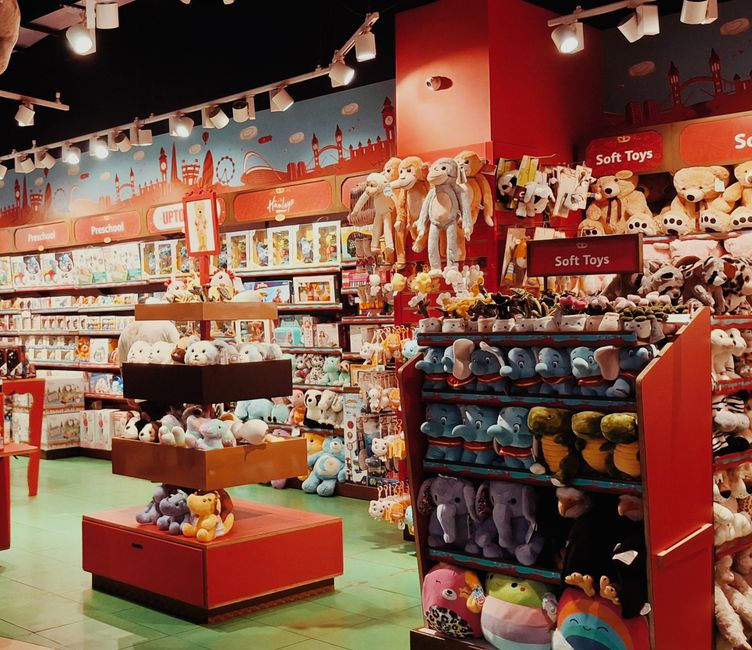
Why does “Premium toys drive US toy market rebound” change the channel strategy for 2026?
Retail Dive’s headline, “Premium toys drive US toy market rebound,” matters because it signals a very specific kind of recovery in the United States: shoppers are still buying, but they are becoming more selective, more gift-led, and more willing to spend on products that justify a higher price point through design, collectability, learning value, licensing, or brand story. For founders planning global expansion into the US, that means channel selection in 2026 cannot be based on volume assumptions alone. You need to match product positioning to the right retail channels, price architecture, and buyer expectations.
The US toy market is not behaving as one uniform category. Value-tier products still move in mass channels, but the rebound is being pushed by higher-ticket segments, hobby-adjacent items, premium plush, collectibles, STEM products, and brands that can win with strong IP or gifting appeal. That aligns with broader market signals from Statista’s 2025 US toy category retail sales breakdown, which shows meaningful differences in how toy segments perform rather than a single, market-wide trend. It also connects with Publishers Weekly’s reporting on Toy Fair 2026, where the overlap between publishing, characters, and toys highlighted how storytelling is increasingly tied to retail success.
For an international brand entering the United States, this creates two immediate implications. First, your route to market should be channel-specific: Amazon, specialty toy, national mass retail, museum and gift, club, and bookstore channels each reward different product economics and merchandising attributes. Second, your premium positioning will be tested not only by consumers but by retail buyers, who now expect evidence of velocity drivers: margin, repeatability, gifting occasions, shelf productivity, digital ratings, and compliance readiness.
If you are still treating the US as a single-market launch with one universal sell-in deck, you are likely to miss the rebound’s real opportunity. The winning play in 2026 is not “be everywhere.” It is “enter the channels where your product earns trust quickly and scales without failing operationally.”
Which US retail channels matter most for Toys & Games brands in 2026?
The short answer is that the US market rewards a layered channel strategy. Most founders should think in terms of priority channels rather than all-channel launch. Each channel has distinct listing requirements, margin expectations, and proof points. For premium or differentiated Toys & Games, the most relevant channels in 2026 are Amazon, specialty toy retail, mass retail, bookstores and pop-culture chains, gift and museum stores, and selected distributors serving independent retail.
| Channel | Best fit | Typical buyer focus | Main risk |
|---|---|---|---|
| Amazon | Search-driven, review-friendly, premium storytelling, niche demand aggregation | Conversion, ratings, pricing, packaging, content quality | High ad costs, copycats, margin erosion |
| Specialty toy chains & independents | Premium toys, educational play, collectibles, design-led products | Differentiation, demo value, giftability, rep support | Fragmented accounts, slower scale |
| Mass retail | Broad-appeal SKUs with strong supply chain discipline | Turn, price architecture, OTIF, packaging compliance | Chargebacks, slot competition, lower flexibility |
| Bookstores & entertainment chains | IP-led, literacy-linked, licensed, activity and collectible products | Cross-category fit, story tie-in, impulse potential | Limited shelf space, curation standards |
| Museum, gift, and boutique retail | Educational, design-led, science, craft, premium gifting | Brand story, packaging, novelty, premium ticket | Small orders, seasonal volatility |
| Distributor-led independent retail | Early market entry and broad specialty coverage | Wholesale margin, ease of replenishment, catalog fit | Lower control, distributor prioritization |
Amazon remains the fastest way to test US demand, especially for imported brands without a field sales team. It is often the best first channel for premium products that need education, comparison images, and consumer reviews to justify price. However, Amazon is no longer a “set and forget” route. It requires channel pricing discipline, optimized content, inventory forecasting, and close review management. This is where an Amazon Listing Audit can be practical before launch: many toy brands underperform because their listing images, age grading language, safety messaging, and search terms are not aligned with US shopper behavior.
Specialty toy retail is where many premium brands build credibility. Independent toy stores, regional chains, and curated specialty accounts can be more receptive to innovation than big-box buyers, particularly if your item demos well or has a strong seasonal story. These retailers often look for products that are not easily price-shopped, which is useful for preserving premium pricing. The trade-off is slower scale and the need for stronger rep or distributor support.
Mass channels still matter, but they should rarely be your first US stop unless your operations are mature. Big-box and broadline retailers can deliver volume, but they come with strict packaging specs, EDI requirements, chargeback exposure, promotional calendars, and intense buyer scrutiny. If your brand is still proving fit in the US, mass retail too early can create expensive failure rather than efficient growth.
How should brands choose between Amazon, a distributor, and direct retail buyer outreach?
This is one of the most important market entry decisions. There is no universal answer, but there is a practical framework. Choose Amazon first if your product benefits from education, visual comparison, niche search demand, and direct review-building. Choose a distributor if your goal is broad specialty coverage, lower fixed selling costs, and a faster path into independent stores. Choose direct outreach to retail buyers if you have a clear proof story, strong margins, and the operational capacity to support national or regional accounts.
Amazon-first works especially well for brands selling construction kits, sensory toys, collectibles, educational games, premium plush, and parent-purchased developmental products. You control merchandising, test bundles, monitor reviews, and learn which claims resonate. If repeat keywords cluster around “gift,” “screen-free,” “travel,” “learning,” or “collector,” those signals can later strengthen your wholesale pitch.
Distributor-first is often smarter for overseas founders who do not yet have US sales infrastructure. A specialty distributor can open doors to independent toy, gift, museum, and bookstore accounts that would be inefficient to service one by one. But distributor economics are unforgiving. You need enough wholesale margin to absorb distributor cuts, freight, samples, and promotions without breaking your P&L. Many brands underestimate this and discover too late that their premium shelf price does not leave enough room for the route to market.
Direct-to-buyer outreach makes sense when you already have proof: successful international sell-through, social traction, Amazon velocity, trade show response, or licensing support. In 2026, US buyers want more than a beautiful founder story. They want a concise answer to five questions: Why will this sell now? Why at this price? Why in this channel? Why is the packaging retail-ready? Why is the supply chain reliable? A strong US Launch Report ($599) can help founders map realistic channel sequencing before they start outreach, instead of pitching every account with the same assumptions.
- Choose Amazon first if your product needs explanation, reviews, and content-led conversion.
- Choose a distributor first if you need reach into independents and can support wholesale margin structure.
- Choose direct buyer outreach first if you already have strong commercial proof and operational readiness.
- Use a hybrid model if your brand can protect pricing and avoid channel conflict.
What do US retail buyers and listing requirements actually look for in Toys & Games?
US listing requirements in Toys & Games go far beyond “send a catalog.” Buyers expect complete, standardized product information and increasingly use that information to screen out risk before a conversation goes far. Founders should prepare a retail data pack that includes UPCs, master case dimensions, inner pack details, age grading, safety testing status, tariff code, country of origin, MSRP, wholesale price, margin structure, lead times, minimum order quantities, and merchandising assets. If you cannot provide this cleanly, many buyers will assume your launch readiness is weak.
For premium products, buyers also want to understand the reason a shopper will trade up. That could be elevated materials, a collector angle, STEM learning outcomes, licensed content, premium packaging, sustainability story, or stronger gifting value. In practical terms, your sales sheet should communicate who buys it, who uses it, what occasion drives purchase, and why it earns its price point. “Innovative” is not enough. “Ages 6+, travel-ready magnetic puzzle game with book tie-in and 62% gross margin for specialty retail” is useful.
Content standards vary by channel. Amazon requires optimized titles, compliant bullets, backend search terms, and image sets that answer safety, scale, and use-case questions fast. Specialty retailers care more about line coherence, packaging presence, and whether the item can be recommended by staff. Mass retail buyers care deeply about shelf dimensions, price ladders, replenishment consistency, and promotional planning.
Founders should also expect tougher scrutiny around tech-enabled or connected toys. The 2025 PIRG Trouble in Toyland report flagged hidden risks tied to A.I.-driven features and toxics, reinforcing that safety and transparency are commercial issues, not just legal ones. If your toy uses apps, recording functions, batteries, magnets, chemicals, or direct skin contact materials, buyer questions will come early and often. In those cases, product claims, warning language, and packaging need a pre-launch review, not a post-listing fix.
What regulatory compliance issues can block a US toy launch before it starts?
The user brief references the United States as regulated by FDA, but for most Toys & Games, the frontline regulatory framework is broader and more commonly tied to the Consumer Product Safety Commission, federal hazardous substance rules, labeling requirements, and retailer-specific safety documentation. Some products with cosmetics, topical compounds, food-contact, or novelty ingestible elements may also trigger FDA considerations, but a standard toy launch is usually blocked by missing toy safety documentation long before any FDA issue appears.
At minimum, brands should assess age grading, small parts risk, sharp points, flammability considerations, heavy metals and substrate testing, tracking labels, country-of-origin marking, choking warnings, and packaging claims. Products intended for children often require formal test reports from accepted labs and a compliant Children’s Product Certificate. Battery-operated toys, magnetic products, slime-style compounds, craft kits, water beads, and sensory materials can all carry added scrutiny. This matters commercially because major retailers, Amazon included, may request documentation before listing or after a random compliance review.
Tariffs are also a 2026 channel issue, not just a finance issue. PBS reported on the risk that new US tariffs on Chinese imports could push holiday toy prices higher. For imported brands, this affects price ladders, wholesale quotes, and channel viability. A product that works in specialty at $34.99 may fail in mass retail at $39.99 after landed cost shifts. Founders should build multiple cost scenarios, especially if sourcing is concentrated in China.
If your product packaging, warnings, or claims were built for Europe, the UK, or Australia, do not assume they transfer cleanly to the US. Retailers often reject products over issues that seem minor to founders: incomplete age markings, inconsistent net contents presentation, warning placement, unsupported learning claims, or barcode formatting errors. An AI Label Compliance Analysis ($599) can be useful at this stage because it identifies packaging and labeling gaps before samples go to buyers or fulfillment centers.
- Check testing status before outreach, not after purchase orders arrive.
- Review all claims such as educational, non-toxic, sensory-safe, or eco-friendly for substantiation.
- Stress-test tariff exposure and landed cost by channel.
- Align packaging to US warning, origin, and traceability expectations.
How can a new-to-US brand build a realistic 12-month retail channel plan?
A practical 12-month plan starts with channel sequencing, not national ambition. In quarter one, most brands should validate product-market fit digitally and operationally. That means localized packaging review, landed cost modeling, competitor mapping, and Amazon or DTC content preparation. In quarter two, use early data to approach specialty accounts, independent retailers, or distributors with a clearer sales story. In quarter three, refine based on sell-through and prepare for holiday execution. In quarter four, evaluate whether your top SKUs are truly ready for broader retail conversations in the following cycle.
Founders often ask whether trade shows still matter. In toys, yes, but only if the business is ready to capitalize on them. The Toy Fair 2026 conversation around publishing and toys suggests that buyers are actively looking for products with cross-category narratives, character development, and built-in storytelling. If your brand can connect to books, learning systems, fandom, or content ecosystems, that should be visible in your retail pitch. Trade events are less useful when they are treated as brand theater and more useful when they are tied to concrete account targets, post-show follow-up, and channel-specific offers.
Here is a workable launch path for many imported premium toy brands entering the United States in 2026:
- Month 1–2: Validate compliance, landed cost, and US pricing architecture.
- Month 2–3: Build Amazon-ready content and wholesale sales sheets.
- Month 3–5: Launch 3–5 hero SKUs online; gather reviews and conversion data.
- Month 4–6: Pitch specialty retail and museum/gift accounts with proof points.
- Month 6–8: Evaluate distributor fit for independent scale.
- Month 8–12: Prepare line reviews for selected regional or national retail buyers.
If you are unsure where your brand sits on that path, a US Market Snapshot ($349) can help identify whether the opportunity is strongest in Amazon, specialty retail, or distributor-led expansion. For brands managing multiple markets, BrandVault and Industry Intel can also help centralize buyer notes, competitor tracking, and category developments so the US launch does not run on disconnected spreadsheets and assumptions.
What should founders do now if they want US toy retail traction in 2026?
Start by accepting the central lesson of the rebound: premium demand exists, but it is highly channel-dependent and unforgiving of poor preparation. The US market is buying toys, but buyers and shoppers are rewarding brands that present a clear value story, strong safety and compliance discipline, and retail-ready operations. That is why the anchor story matters. “Premium toys drive US toy market rebound” is not just a macro headline; it is a signal that better-positioned brands can still grow even in a noisy, cost-pressured category.
Your next move should be to narrow your focus to the channels where your product has the best odds of fast trust: Amazon if education and reviews matter, specialty if curation and gifting matter, distributor-led if breadth matters, and direct buyer outreach if you already have proof. Build the paperwork, pricing logic, and compliance files before outreach. Then tailor your pitch by channel instead of recycling one universal deck.
Brands that enter the United States well usually do three things better than everyone else: they understand the commercial logic of each channel, they treat regulatory compliance as a sales enabler, and they use early data to decide where to expand next. If you want a clearer path, request a personalized US Launch Intelligence Report or start with a free Brand Readiness Score to see which retail channels, buyer requirements, and compliance gaps should shape your 2026 launch plan.