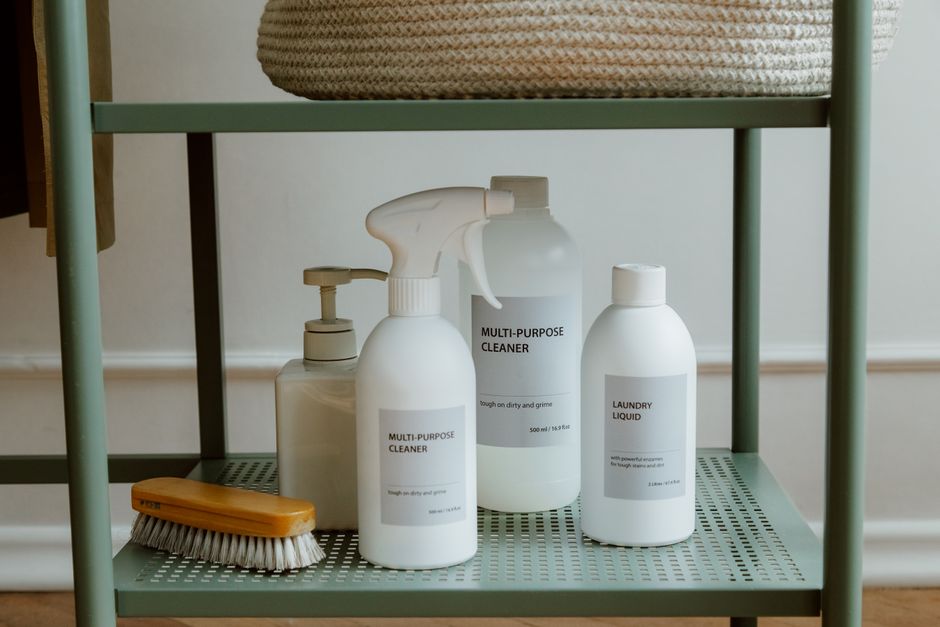
Why this matters for international cleaning and household brands
The United States remains one of the most attractive growth markets for Cleaning & Household Products because it combines category scale, premiumization opportunities, and a retail environment that still rewards differentiated brands. For international operators, the US is not simply a larger version of a domestic market. It is a commercially dense, compliance-heavy, channel-fragmented market where strong products can win quickly if the brand enters with the right market positioning, channel sequencing, and claims discipline. The brands gaining traction are not always the biggest global names. They are often the ones that arrive with a clear reason to exist in the US and a strong understanding of retailer, marketplace, and consumer expectations.
That matters because the US cleaning category is unusually sensitive to a few variables that can make or break launch economics: retailer margin requirements, pack-size expectations, shipping cost per unit, formula and ingredient scrutiny, and the way shoppers compare value across private label, heritage incumbents, and challenger brands. A founder may believe their concentrated refill, eco-spray, dish liquid, toilet cleaner, laundry treatment, or home fragrance cleaning hybrid is competitive, only to find that its unit economics collapse on Amazon, its claims trigger review concerns, or its labels require revision before a compliant launch. Winning in the United States is less about ambition than precision.
International brands are succeeding because they are approaching US entry as an intelligence problem, not just a distribution exercise. They are running competitive analysis before they choose a hero SKU. They are benchmarking ingredients, formats, and pricing ladders. They are understanding whether they should enter through DTC, Amazon, specialty retail, mass retail, or regional chains. And they are making early decisions around claims, packaging, and fulfillment that fit the market rather than forcing a home-market playbook onto the US consumer.
For executives planning global expansion, this category offers a sharp lesson: in the US, household products can move fast when product-market-channel fit is right, but mistakes become expensive very quickly. That is why strong pre-launch intelligence, label review, and realistic pricing architecture are now core parts of successful market entry planning.
What is driving demand in the US cleaning and household category
Several structural shifts explain why new international entrants are finding room in a crowded market. First, consumers have widened their definition of value. Value no longer means “lowest shelf price” alone. In many subcategories, it means a mix of efficacy, safety perception, scent quality, ease of use, and sustainability cues such as refill systems, concentrated formats, reduced plastic, or ingredient transparency. This creates space between mass incumbents and niche natural brands where international companies can compete effectively.
Second, US shoppers are increasingly comfortable discovering household brands through digital channels. Amazon, Walmart Marketplace, TikTok-driven awareness, and DTC sampling models have lowered the barrier to trial for products that solve specific use cases: pet odor, hard-water cleaning, sensitive-skin laundry, minimalist scent profiles, probiotic surface care, or design-led countertop products. For non-US brands, that means access to customers no longer depends entirely on winning national retail distribution in year one.
Third, channel economics are pushing buyers to consider brands that can support margin while offering novelty. Retailers and marketplaces want products that convert, generate repeat, and justify price architecture. A brand that can prove strong review velocity, low damage rates, compliant claims, and differentiated packaging has a credible opening. This is particularly true in premium dish care, refillable all-purpose cleaners, niche laundry boosters, and aesthetically designed home-care systems that sit between utility and lifestyle.
Fourth, US consumers reward specialized problem solving. Generalist “me too” cleaning products struggle unless they win on price. But products built around a sharply defined consumer problem can carve out demand more quickly. Examples include hard-surface disinfecting alternatives for scent-sensitive households, compact formats for urban living, premium fragrance-forward sprays, and family-safe positioning supported by clear instructions and compliant language. International brands that understand this tend to outperform those entering with generic positioning.
The conditions that help international brands win
Not every overseas brand is positioned to succeed in the US. The winners usually share four characteristics. They offer a clear point of difference, they adapt to US commercial realities, they invest early in regulatory compliance, and they use evidence-led benchmark work to avoid pricing and assortment mistakes. Without those four elements, launch momentum tends to stall.
A clear point of difference can come from formula technology, refill mechanics, concentrated delivery, packaging design, fragrance identity, ingredient standards, or a compelling origin story tied to quality. But in the US, the difference must be legible within seconds on shelf or on a mobile screen. “European quality” or “internationally loved” is not enough. Shoppers need to understand why the product performs better, fits their routine better, or aligns with their values more strongly than established alternatives.
Adapting to US commercial realities matters just as much. Unit sizes, trigger compatibility, pack durability, leakage prevention, bundling logic, and freight costs all influence whether a product works in the market. A refill concept that thrives in a compact European retail environment may underperform in the US if the starter kit appears too small for its price point or if replacement refills are difficult to ship profitably. Likewise, a premium glass-packaged kitchen cleaner may look differentiated, but if breakage rates are high and parcel costs are punitive, scale becomes difficult.
Early compliance investment is another major separator. In the US, cleaning products may involve requirements and scrutiny tied to labeling, claims, ingredient-related considerations, child safety language, and channel-specific policy review. The exact pathway depends on the product type and claims profile, but the core lesson is consistent: brands that wait until production is complete to review labels and substantiation usually face delays and rework. This is where pre-launch tools such as US Brand Launch’s AI Label Compliance Analysis ($599) can reduce expensive false starts by flagging label and claims issues before inventory ships.
Finally, disciplined benchmarking is what turns ambition into execution. Many international founders underestimate how different the US market looks once you compare shelf pricing, promo cadence, review counts, ounce-based value, and top competitor claims side by side. A proper competitive analysis should not only ask “who are the competitors?” but also “how are they priced, merchandised, reviewed, and positioned by channel?” That intelligence often determines which SKU becomes the hero, what price architecture is viable, and whether the brand should lead with efficacy, design, sustainability, or a combination.
How the US market really evaluates cleaning and household products
US retailers, marketplaces, and consumers tend to evaluate Cleaning & Household Products through a more operational lens than founders expect. Performance claims must be credible and clearly communicated. The packaging needs to survive the channel environment. Instructions must be easy to follow. Pricing has to fit category norms or be justified by visible differentiation. And because household products are habitual purchases, brands need an easy repeat story: refills, multipacks, subscription, broad utility, or strong fragrance attachment.
Consumer behavior also varies sharply by subcategory. Laundry often tolerates stronger premium ladders when scent, skin-sensitivity, or performance is clearly elevated. Surface cleaning can become brutally price-transparent because ounce and spray-bottle comparisons are immediate. Dish care lives in a middle ground where efficacy and ingredient perceptions both matter. Air-care-adjacent cleaning products can support higher prices if scent and design do real brand work. This is why one-size-fits-all launch strategy rarely works across household segments.
Amazon and retail shelves each create their own test. On Amazon, your listing must convert in a highly comparative environment where review count, image clarity, leakage concerns, and per-ounce value are constantly judged. In retail, packaging hierarchy, shelf blocking, promo support, and shopper education become more important. A brand may have excellent natural sell-through in one environment and still fail in the other. International entrants that win are usually explicit about where they expect the first proof of demand to come from and how they will tailor assets by channel.
For this reason, many brands begin with a focused launch intelligence process rather than broad distribution. US Brand Launch’s US Market Snapshot ($349) can help founders assess channel direction, competitor pricing bands, and immediate product-market fit questions before they commit to a larger build. For brands preparing a fuller launch plan, the full US Launch Report ($599) is more useful when a company needs deeper insight into category dynamics, assortment opportunity, and positioning gaps across the US market.
US benchmark table: what international brands should compare before launch
A practical benchmark framework should compare more than shelf price. It should evaluate claim territory, unit economics, pack architecture, and channel fit. The table below highlights the key dimensions serious entrants should review before entering the United States.
| Benchmark Area | What to Compare in the US | Why It Matters | Typical Risk if Ignored |
|---|---|---|---|
| Pricing | Retail price, promo price, per-ounce cost, bundle pricing, subscription discount | Reveals whether your value story is competitive by channel | Overpricing relative to visible alternatives or underpricing below viable margin |
| Claims | Efficacy language, safety cues, sustainability claims, fragrance descriptors | Shows where differentiation is crowded and where compliance review is needed | Unsubstantiated claims, listing suppression, or weak conversion |
| Format | Ready-to-use, concentrated refill, tablets, pods, sachets, wipes, bulk packs | Determines shipping economics, shopper familiarity, and repeat behavior | Low trial because the format feels unfamiliar or inconvenient |
| Packaging | Leak resistance, trigger quality, closure integrity, material choice, visual hierarchy | Strongly affects returns, reviews, and shelf stand-out | Damage claims, poor ratings, and retail rejection |
| Channel Fit | Amazon, DTC, specialty, grocery, mass, club, regional chains | Different channels reward different price points and pack configurations | Mismatch between product economics and channel expectations |
| Compliance | Label structure, warnings, directions, ingredient-related considerations, category-specific oversight | Protects launch timing and reduces rework costs | Delayed launch, relabeling costs, or policy violations |
This type of comparison often changes launch decisions. A product that appears premium but fairly priced in home market currency may become uncompetitive once import costs, distributor margin, marketplace fees, and US promo expectations are added. Conversely, a concentrated refill that looks expensive on first glance may become compelling if your comparison highlights cost-per-use advantage and lower storage burden for the consumer. Good benchmarking turns assumptions into decisions.
A six-step process for successful US market entry
International brands that win tend to follow a disciplined launch sequence rather than trying to solve everything at once. The process below is a practical structure for market entry in the US cleaning and household category.
- Define the hero use case. Start with the specific cleaning problem, room, or routine where the product has a right to win. “Better all-purpose cleaner” is too broad. “Refillable premium kitchen spray with elevated fragrance and low visual clutter” is far more actionable. This clarifies audience, creative, and channel strategy.
- Run a US competitive analysis. Compare top brands and emerging challengers across price, pack size, claims, reviews, star ratings, image strategy, and merchandising style. Include private label where relevant because private label often shapes value expectations. This is where many founders discover they need to adjust size, bundle strategy, or launch price.
- Pressure-test pricing and margin. Model landed cost, marketplace fees, retailer margin, freight, damage allowance, and promo cadence. Then compare your required retail price against the category’s acceptable range. If the numbers do not work, revise pack architecture before launch rather than hoping branding will compensate for weak economics.
- Complete compliance review early. Review labels, warnings, directions, and claims before final production. Household products can trigger channel concerns quickly if language is vague or unsupported. Early review reduces delays and prevents expensive inventory correction. This is a strong point to use an AI Label Compliance Analysis or similar preflight review.
- Choose channel order, not just channels. Decide what comes first and why. For some brands, Amazon is the fastest proof of concept. For others, DTC plus influencer seeding can establish stronger education before retail discussions. Some products work best in specialty or regional retail first, particularly if merchandising support matters. Sequence matters because each channel teaches different lessons.
- Build a repeat-purchase engine. Plan the second and third purchase before the first sale. That may mean refill subscriptions, bundles, scent rotations, cross-sell sets, or household system expansion. US customer acquisition costs are difficult to justify without a clear repurchase strategy.
This six-step approach is especially useful for brands considering broader global expansion because it forces the organization to localize assumptions. It also creates a cleaner handoff between regulatory, supply chain, sales, and marketing teams. US market wins rarely come from isolated decisions; they come from coordinated execution.
Pricing and market positioning: where many launches are won or lost
Pricing is one of the most misunderstood issues in the US household category. Many international brands treat pricing as a finance output rather than a positioning tool. In reality, US shoppers read price as a signal of performance, quality, and comparability. If your all-purpose cleaner is 40% above the visible benchmark without a strong design, fragrance, concentration, or claims story, you may compress conversion. If it is priced too low, shoppers may assume weak efficacy, and you may not have enough margin to support promotions or wholesale terms.
Strong market positioning translates product truth into commercial logic. For example, a concentrated cleaner should not simply be priced against a ready-to-use spray on bottle price alone. The messaging and merchandising should frame total uses, refill convenience, reduced waste, and perhaps lower long-term cost. A premium laundry treatment should explain not only ingredients or scent but the exact performance moment it owns: odor reset, fabric care, skin sensitivity, or luxury-home sensoriality. In each case, the price becomes easier to defend when the usage story is sharp.
International brands often perform best when they avoid the crowded middle. The undifferentiated middle tends to be where private label, mass incumbents, and broad natural brands all compete. Better outcomes usually come from one of three positions: value-engineered innovation, premium design-led efficacy, or narrow specialist expertise. Which position is right depends on your formula, costs, and consumer proof. But the decision must be explicit, because retailers and marketplaces reward clarity.
Where founders need support, tools like an Amazon Listing Audit can be practical once a launch channel is selected, especially for products where search conversion, visual communication, and review strategy are central to growth. But the listing only performs if the core pricing and positioning work has already been done. That strategic layer is what determines whether the channel scales profitably.
Common mistakes international brands make in the US
The most common errors are not about product quality. They are about translation, assumptions, and sequencing. Below are the mistakes that repeatedly undermine otherwise strong brands.
- Assuming home-market success will transfer directly. A strong European, Asian, or Australian household brand still needs a US-specific proposition, price architecture, and content strategy.
- Leading with too many SKUs. Broad assortments dilute marketing spend and complicate forecasting. Most brands benefit from a hero-SKU-led entry and a clear replenishment path.
- Underestimating compliance review. Label changes after production can be costly. Claims that sound acceptable in one market may require revision or stronger substantiation in the US.
- Ignoring shipping and breakage realities. Heavy liquids, fragile bottles, weak triggers, and leak-prone refills can destroy margins and ratings online.
- Using generic sustainability messaging. US shoppers increasingly expect specifics: refill rates, material reduction, concentrated use, or system longevity. Vague claims do not persuade sophisticated buyers.
- Benchmarking only premium competitors. Consumers compare across broader sets than founders do. Private label and mass products often anchor value perception even when your brand is premium.
- Launching without repeat strategy. Trial is expensive. If there is no refill, bundle, scent extension, or subscription path, customer acquisition can become uneconomic fast.
Many of these mistakes can be reduced with structured pre-launch intelligence. US Brand Launch’s Industry Intel and BrandVault resources can help teams centralize category learnings, competitor tracking, and launch assumptions so commercial decisions are documented rather than anecdotal. That matters when multiple internal teams are trying to move quickly toward a US launch.
What winning looks like in 2026
In 2026, the international brands winning in US household care are not winning by accident. They are entering with fewer products, clearer differentiation, better economics, and stronger evidence. They understand the US shopper’s trade-offs: efficacy versus ingredient comfort, aesthetics versus value, refill ideals versus convenience, and premium price versus visible proof. They know where they sit on that spectrum and communicate it consistently.
They also treat the US as a market that rewards operational discipline. Compliance is addressed early. Competitive analysis is done before packaging is locked. Pricing is tested against real channel conditions. Hero SKUs are chosen based on demand logic, not internal politics. They build the launch in stages, collect learning, and only then widen assortment or retail exposure. That approach reduces waste and increases the probability of profitable traction.
For founders and marketing leaders, the takeaway is simple: the US remains a major opportunity for Cleaning & Household Products, but growth goes to brands that prepare with rigor. If you are evaluating global expansion into the United States, the smartest first step is not inventory. It is intelligence. Get a personalized US Launch Intelligence Report or start with a free Brand Readiness Score from US Brand Launch to see how your product, pricing, compliance, and positioning stack up before you enter.